
Healing Anxious Attachment with Art
- Dec 12, 2025
- 4 min read
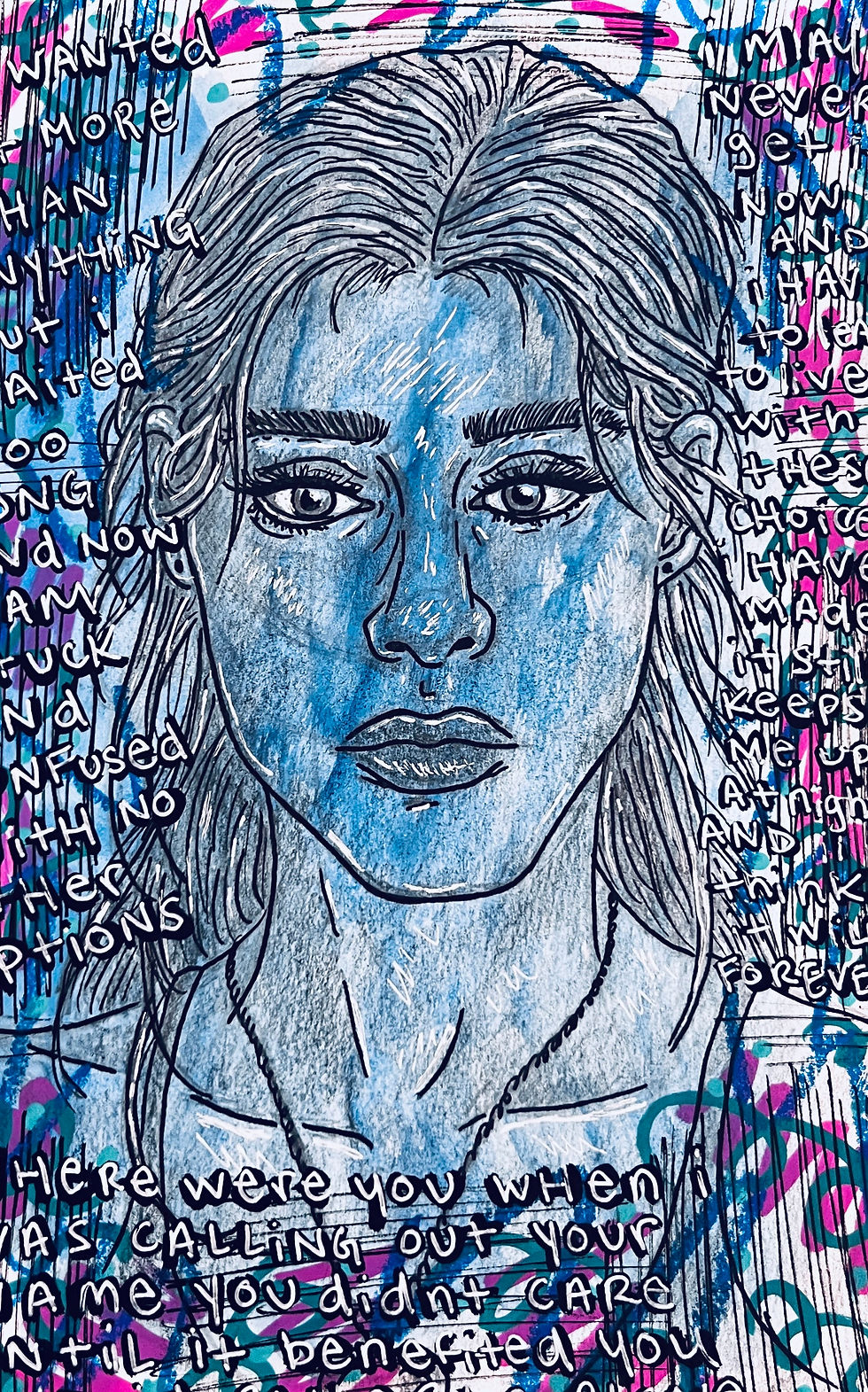
Art can be a powerful resource for people struggling with Anxious Attachment Style or anxious behaviors. It provides a non-verbal means of communication that can be appropriate for those who struggle with emotional regulation or maintaining boundaries. By analyzing the subject, color, shapes, and symbolism utilized in their artwork, anxious attachers can better identify and regulate their own emotions and behaviors.
What is Anxious Attachment?


Anxious (Preoccupied) Attachment Style is an insecure attachment style, or behavior pattern that values emotional closeness while displaying a deep fear of abandonment.
Although many people exhibit anxious behaviors, Anxious Attachment is the attachment style most people think of when they consider what an anxious personality looks like.*
This style consists of:
Hypersensitivity to emotions and emotions of others
Consistent need for validation and reassurance
Deep fear of rejection and insecurity
Emotional dysregulation in relationships
Negative self-image (low perception of self)
Positive image of others (high perception of others)
Many people with Anxious attachment experience low levels of self-confidence and self-esteem. This is because they have a low perception of themselves (“negative self image”) in comparison to their high perception of others (“positive image of others”). This is often a learned behavior in response to their experiences with caregivers in childhood. Anxious attachers may have had caregivers who were emotionally unpredictable or overbearing. It is possible they experienced some level of neglect as a child and their emotional needs were not consistently met. It is common to utilize anxious behaviors as a method to attain these needs and to avoid perceived rejection.
What Behaviors are Indicative of Anxious Attachment?
Heightened emotional responses
Fear of being alone
Need for consistent communication
Need for validation and reassurance
Overanalyzing situations
Excessive worry
Sensitivity to the emotions and behaviors of others
Poor responses to perceived rejection or criticism
Poor self-esteem or self-worth
People-pleasing and putting needs of others above their own
Jealousy and insecurity
Poor sense of boundaries
Codependency or reliance on others

How Art Helps Heal Anxious Attachment
Art is a great resource to begin healing Anxious Attachment. The individual is able to express and explore emotion through a physical process - allowing for mindfulness and self-soothing. When provided with creative freedom, the anxious attacher can experience a comforting release of overwhelming emotion. In this case, their body is able to physically express strong emotion without engaging in self-destructive behaviors.
How to Use Art for Anxious Attachment
Create without a plan: avoid perfectionism or expectation of what it will look like. Focus on the act of doing the creating, rather than the end result. This helps you create more freely without overwhelming emotional responses or a fear of mistakes, which can trigger anxiety and insecurity.
Utilize colors and shapes: draw whatever feels right in the moment. Without thinking ahead, grab whatever colors you naturally gravitate to. Focus on physical sensations and allow your body to move the utensil in whatever manner you like.
Practice mindfulness: focus on how your body feels during heightened emotions. This can be especially helpful for anxious attachers who engage in self-harm. It creates a meditative “flow” state that calms the nervous system and provides a physical release without being self-destructive.
Analyze artwork: only after the creation is complete, you may utilize resources to analyze your own artwork. This may help cultivate self-awareness and encourage the healing process.
Keep or discard the artwork: you may experience uncomfortable emotions after creating or analyzing the artwork. This is completely normal and can be mitigated through self-soothing techniques. One option is to discard or destroy the artwork after completion. This comforts overwhelming emotions of anger while also providing a physical release of negative emotion. Another option is to keep the artwork and put it away so it is only accessed when you feel emotionally ready to view it. This comforts feelings of heightened anxiety and insecurity.
Beginner Resources for Analyzing Your Artwork:
Art Therapy for Anxious Attachment
There are many options for exploring art for Anxious Attachment or anxious behaviors. To encourage healing and self-awareness, it is advisable to work with a Clinical Art Therapist to help evaluate and work on the underlying emotions.
Since anxious attachers may experience emotional resistance to accepting help from others in a clinical environment, educating oneself to improve self-awareness is the next-best option. If receiving clinical help is too distressing at the moment, there are many excellent resources online for self-analyzing symbolism, subject, and color.
However, self-analysis is limited and a clinical therapist may be able to offer an outside perspective that can further self-understanding. Gradually improving awareness through self-education may lead to the ability to receive help from a clinician in the future to gain additional awareness and navigate roadblocks to healing.
*A Note on Anxious-Avoidant Attachment
In the case of presenting Anxious-Preoccupied Attachment including a deep distrust or fear of others with a strong fear of vulnerability, the anxious behaviors may be categorized in a different way. A distorted perception of interpersonal relationships and emotional dysregulation, coupled with inconsistent behaviors and a negative or fearful image of others can be indicative of Disorganized (Fearful-Avoidant or Anxious-Avoidant) Attachment. While this is not classified as an Anxious Attachment Style, it can have many similarities. Those with Disorganized Attachment exhibit characteristics of both Anxious Attachment Style and Avoidant Attachment Style. They may gravitate toward more anxious behaviors or more avoidant behaviors, dependent on the individual.
Disorganized Attachment Style may present as Anxious Attachment Style when the anxious behaviors are immediately followed by dismissive behaviors. Disorganized attachers may present as craving validation and emotional closeness, while simultaneously exhibiting strong feelings of mistrust and distance. This creates cognitive dissonance and inconsistent, unpredictable behaviors. For more information on Disorganized Attachment, click here.
Article Resources:
Disclaimer: All content reflects the author’s opinions and personal experiences. The author is not a medical or mental health professional. Nothing shared is intended to replace or negate advice from licensed professionals.

Comments